
CCUS Part I: Overview
We are all talking about carbon capturing, but what’s the general procedure, impacts, or big projects around the globe right now? This special episode presents CCUS Part I: Overview.

This post was first published in 2021, HEC Paris Energy Newsletter, written by me.
Today we are focusing on the special topic of Carbon Capture, Utilization, and Storage (CCUS). We are all talking about carbon capturing, but what’s the general procedure, impacts, or big projects around the globe right now? This special episode presents CCUS Part I: Overview. In the following weeks, I will debrief Longship, Porthos, and other big projects step by step.
In September, the facility Orca was built by Swiss startup Climeworks AG, to suck CO₂ out of the air in Iceland. Icelandic startup Carbfix will then pump it deep into the ground, turning it into stone forever. The plant will capture 4,000 tons of CO₂ a year, making it the largest direct-air capture facility in the world. However, whether Direct Air Capture is working? And how do CCUS work in general?
What is CCUS?
When we burn fossil fuels, carbon is emitted in the form of carbon dioxide. CCUS’s purpose is to "capture" carbon dioxide before it is released into the atmosphere, and transport and store it in a certain way to reduce greenhouse gas emissions. Other than storage, nowadays there are a lot of utilization scenarios of transforming CO2 to other materials.
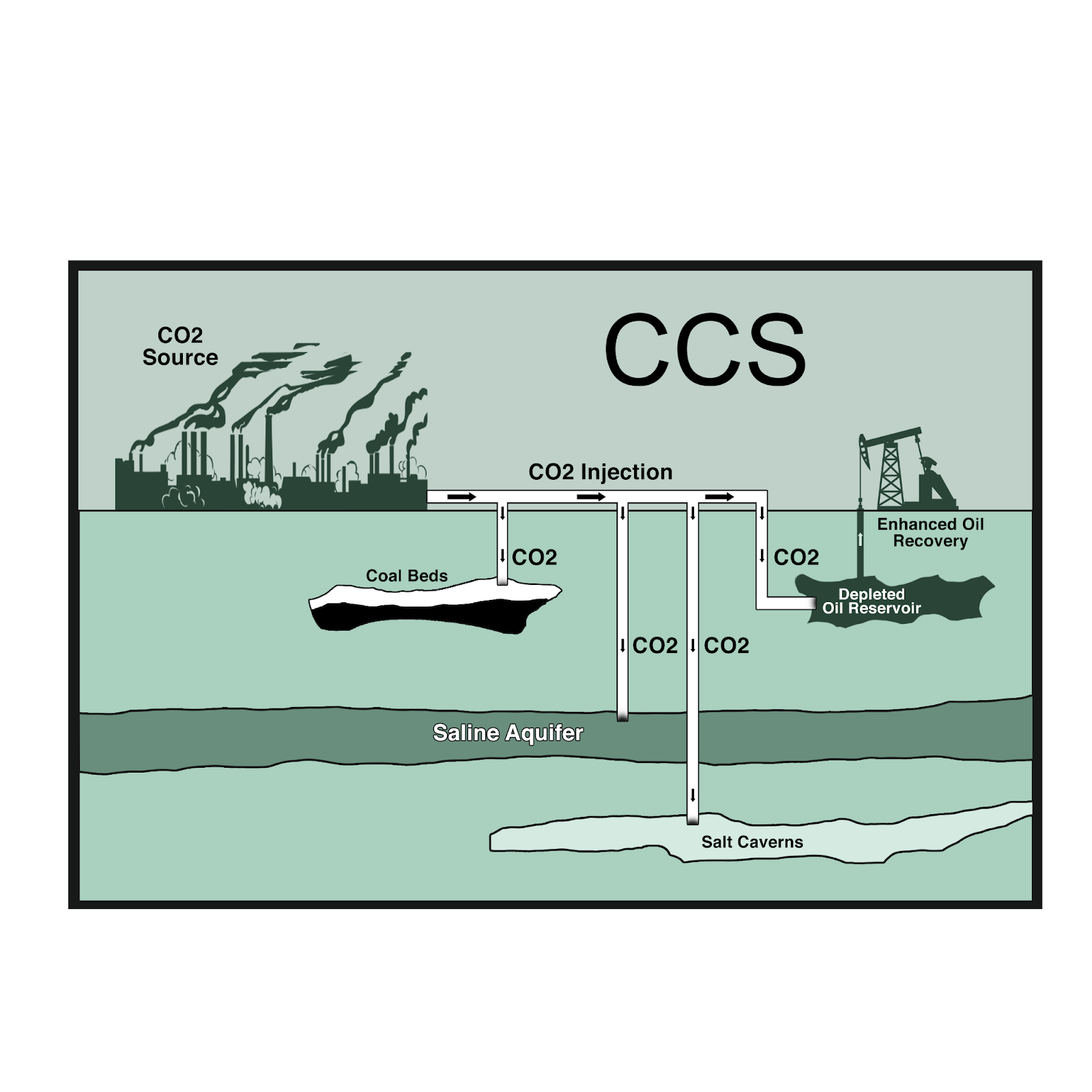
Capture: There are currently three main methods of carbon capture
Post-combustion capture: Separate carbon dioxide from the gas generated by combustion
carbon adsorption (CO2 is adsorbed on the adsorbent)
carbon absorption (CO2 dissolved in solution)
membrane absorption (CO2 is separated from other gases by a porous structure)
cryogenic gas separation, etc.
Pre-combustion capture (Pre-combustion capture): Remove carbon from the fuel before combustion, such as integrated gasification combined cycle technology (IGCC)
Oxy-combustion capture: Use high concentration of oxygen instead of air during the combustion process to prevent nitrogen in the air from diluting the CO2 in the flue gas, in order to produce high concentration, easy-to-capture CO2
Cryogenic
Ion Transport Membranes
Chemical-looping combustion
Transportation: Most of the captured carbon dioxide exists in gas or liquid form, and is usually transported by pipeline or ocean ships. Carbon transportation pipelines existed in Europe and America many years ago. For example, the United States began to transport carbon through pipelines in the 1970s, and Norway was in the 1990s.
Storage and Utilization: What should be done with the captured carbon? There are already some technologies that can reuse carbon, such as making concrete, food additives, biological fertilizers, etc., but currently, they are not mature enough to be commercialized. Therefore, most carbon storage methods are to inject carbon deep underground for geological storage.
There are some other hot carbon capture keywords:
Direct Air Capture (DAC) mentioned in the last newsletter, which is to extract CO2 from air directly, there are more and more new labs starting their trials. The third derivative report brief mentions that even the price today for DAC is around $500-600/t CO2, it will go down to $50-100/t CO2 in the future with innovative solutions. Attached are the companies working on breaking the technology.
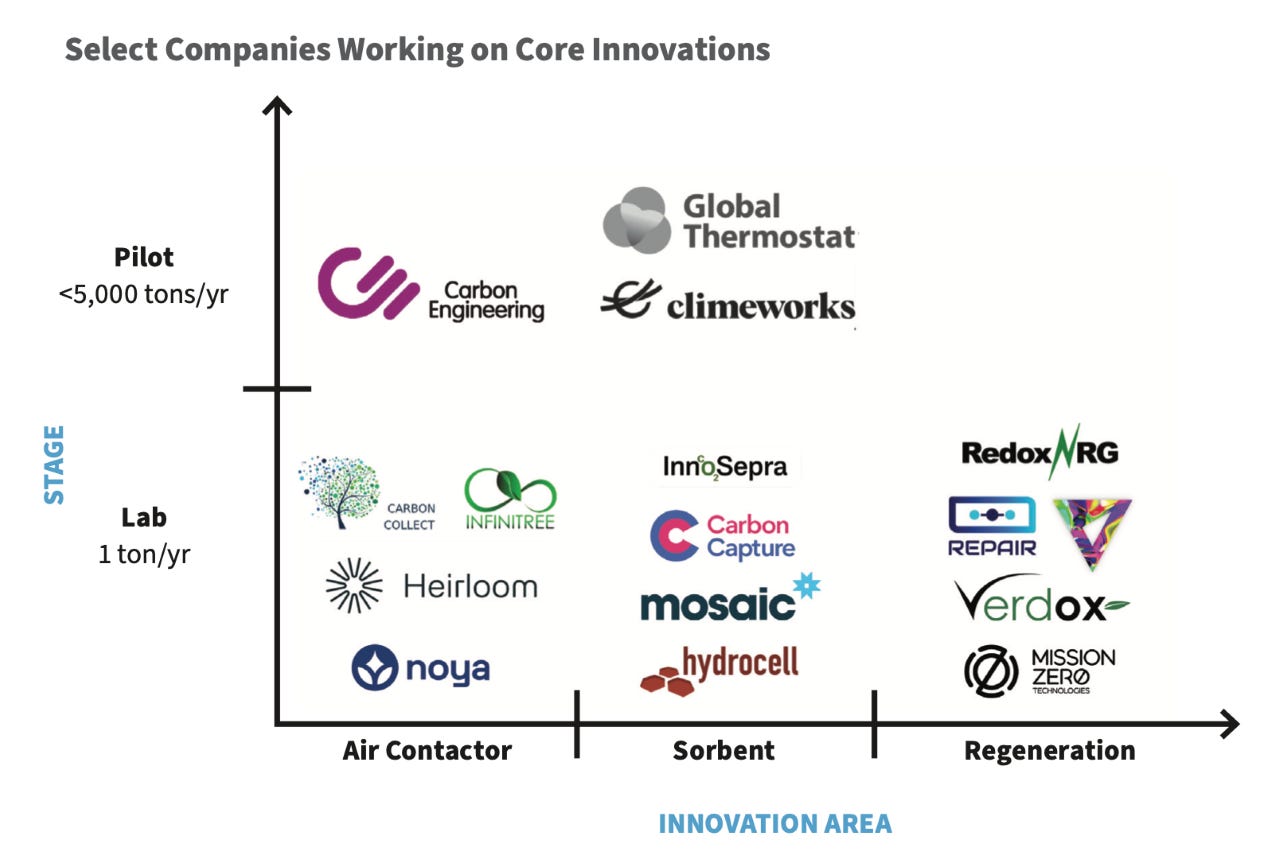
Source: Climatetech VC
Ocean-based Carbon Dioxide Removal (CDR) - The ocean covers 70% of Earth’s surface and has absorbed ~40% of CO2 emissions since the beginning of the industrial era. Some of the approaches include Biological Pump – transports CO2 from surface waters into the deep ocean and marine sediments.
Why do we care about CCUS?
To achieve decarbonization
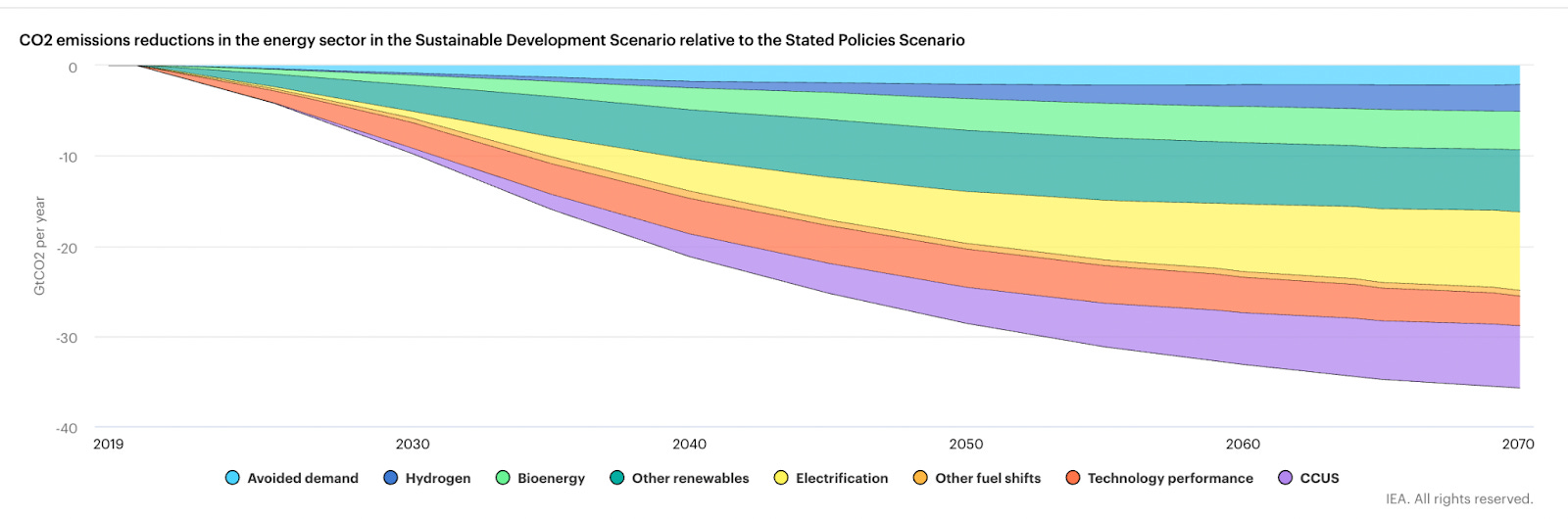
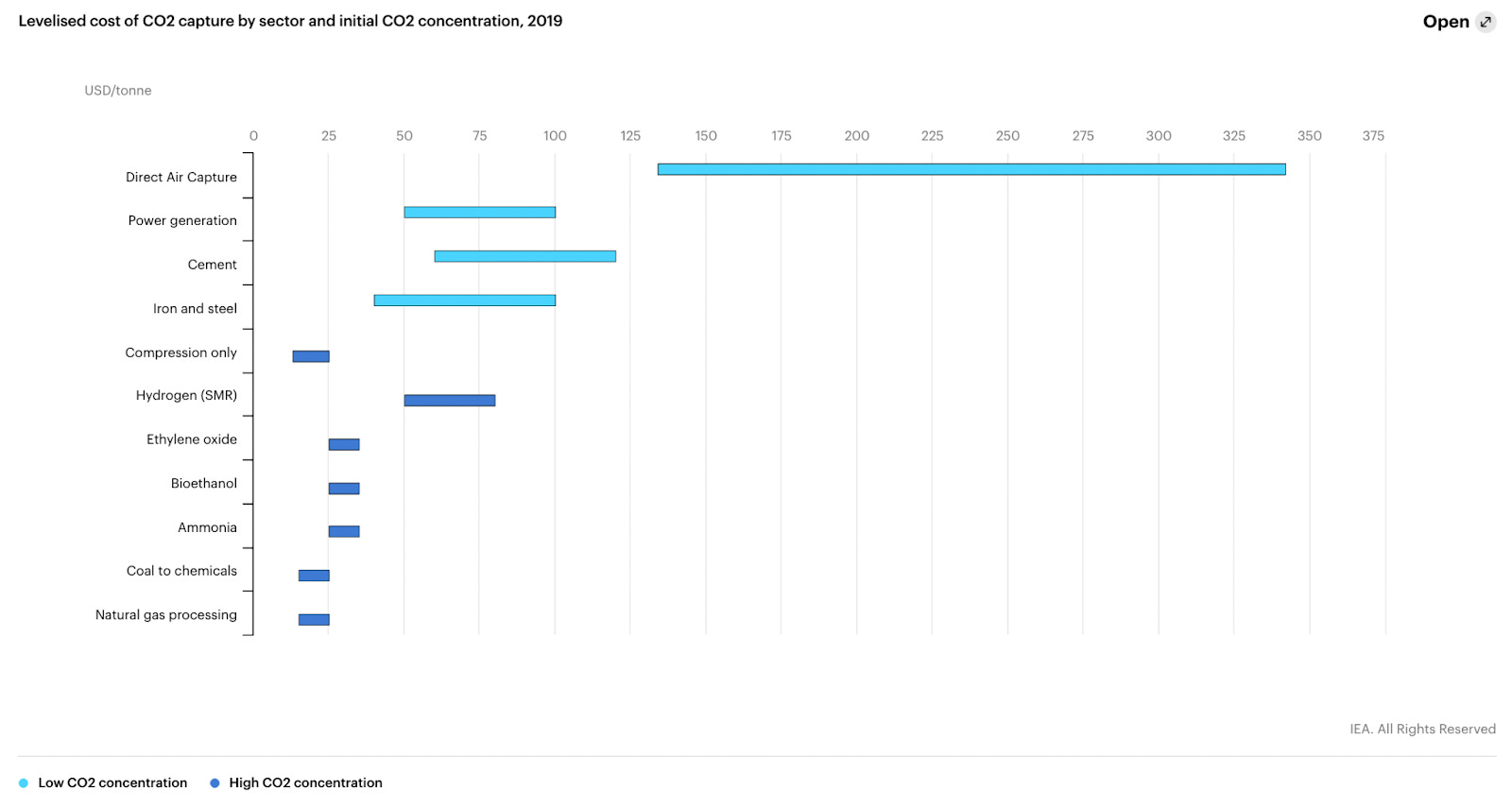
CCS does not have a single cost price, and can be one of the lowest cost industrial carbon reduction methods in the future
There is no "uniform price" in the value chain of CCS or CCUS. For example, in terms of carbon capture technology, if it is captured from high-concentration carbon dioxide gas streams in industry (for example, in the process of producing ethanol or processing natural gas), then the cost of capturing one ton of carbon dioxide can be maintained between US$15-25; but if To capture carbon dioxide from low-concentration air streams (for example, in the production of cement and power industries), the cost of light capture can reach US$40-120 per ton. Direct Air Capture is currently the most expensive technology in carbon capture, and it costs about US$150-330 per ton of carbon dioxide.
For heavy industries, CCUS may be the only carbon reduction program for certain industries. The carbon emissions of some industries do not come from burning fossil fuels. For example, for cement plants, two-thirds of emissions come from the chemical reaction of heating limestone, rather than burning fossil fuels. Some current CCS technologies, such as the chemical absorption method in post-combustion capture, use limestone as a raw material, which can capture more than 90% of carbon dioxide and is recycled into cement production after the adsorbent is deactivated.
The dual investment value of carbon capture
In 2020, 336 million US dollars of funds from global venture capital institutions will enter the field of carbon capture, including the traditional energy company BP. How can the return on investment of carbon capture technology be calculated? In addition to reducing the necessary future carbon dioxide emissions to reduce the cost of carbon dioxide governance in the future, investment in CCS project technology can also promote the linkage of carbon capture with other industries and achieve double benefits.
Some projects require large-scale investment from carbon capture to final carbon storage. For example, large-scale CCS projects planned by the country: Longship in Norway, the Porthos project, the Sapling project in the United Kingdom, the Huaneng Power Plant project in China, etc.; but there are also regional projects that combine CCS with clean energy and the power industry, linking different carbon reduction programs, such as peak and valley production of renewable energy.
Current Status of CCUS
So far in 2021, more than 100 new CCUS facilities have been announced and the global project pipeline for CO2 capture capacity is on track to quadruple.
In 2020, the global effective CO2 capture amount will be 40 million tons per year (if all installations run smoothly, it can reach 115 million tons), approximately 0.09% of the global 430 billion tons of carbon dioxide emissions per year in 2020).
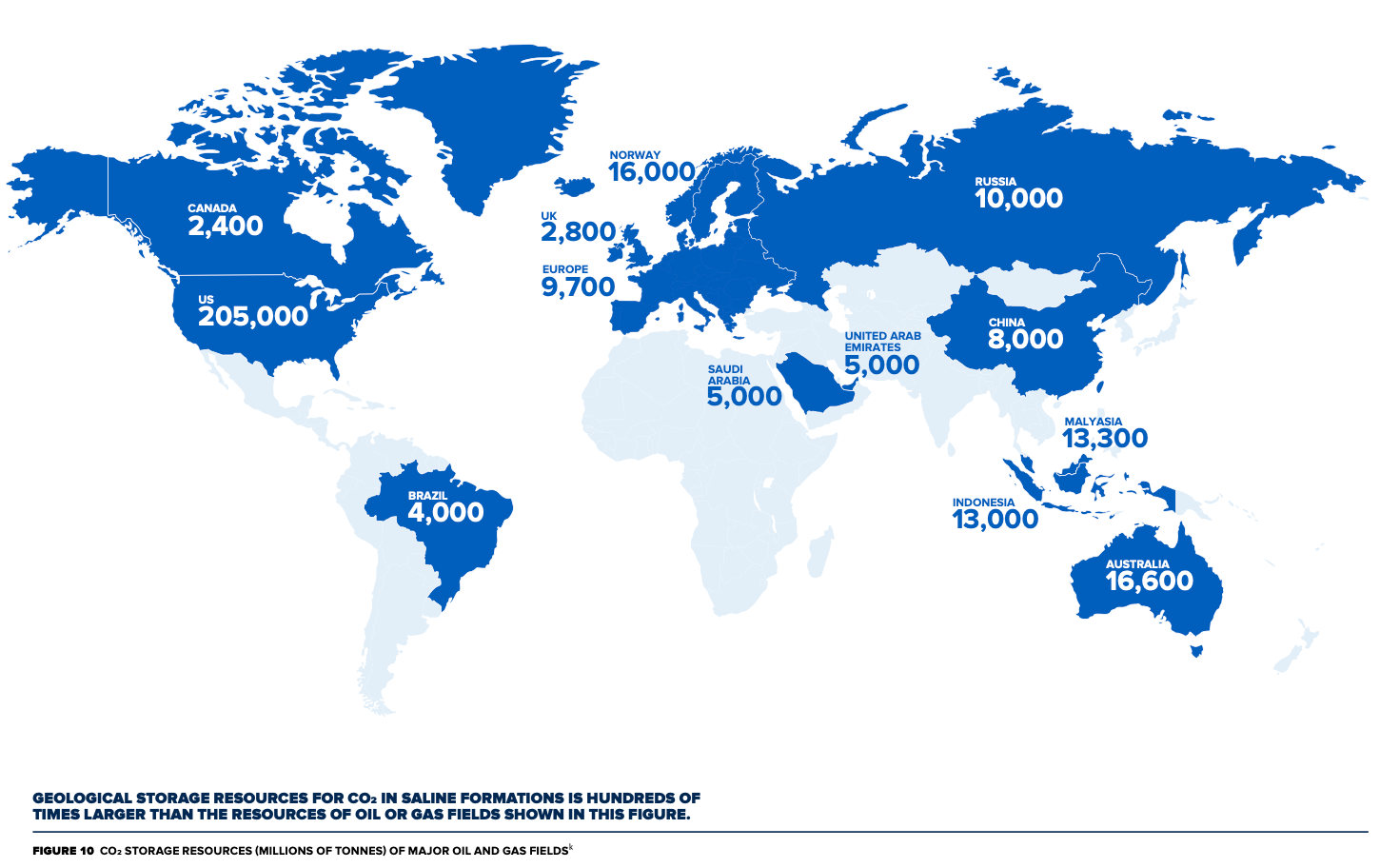
Large-scale commercial CCUS projects in operation starting since 2020:
Canada’s Alberta Carbon Trunk Line (ACTL) with Agrium CO2 stream
Source of Carbon Dioxide: Fertiliser production
CO2 capture capacity (Mt/year): 0.3-0.6
Storage Type: EOR (Enhanced Oil Recovery) - storing CO2 in depleted oil fields to produce incremental barrels of oil
Canada’s ACTL with North West Sturgeon Refinery CO2 stream
Source of Carbon Dioxide: Hydrogen production
CO2 capture capacity (Mt/year): 1.2-1.4
Storage Type: EOR
Useful Links:
IEA’s report on CCUS: https://www.iea.org/reports/about-ccus
IEA’s report on CCUS cost: https://www.iea.org/commentaries/is-carbon-capture-too-expensive
Global Status of CCS 2020, Global CCS Institute
Global Climate Tech Unicorns: https://www.holoniq.com/climatetech-unicorns/
Some sources are from ClimateTech VC, Global CCS Institute, and Longship Report.
I am Wenru (Wendy) Shi, now living in Paris. I have studied, lived, and worked in Asia, US and Europe for a while, and experienced Greentech startup ecosystems on three different continents. Things have been changing really quickly, and different cultures and social backgrounds put different emphasis on the consequences.
Let’s connect! On LinkedIn, or subscribe me here on Substack :) I would like to talk to you.